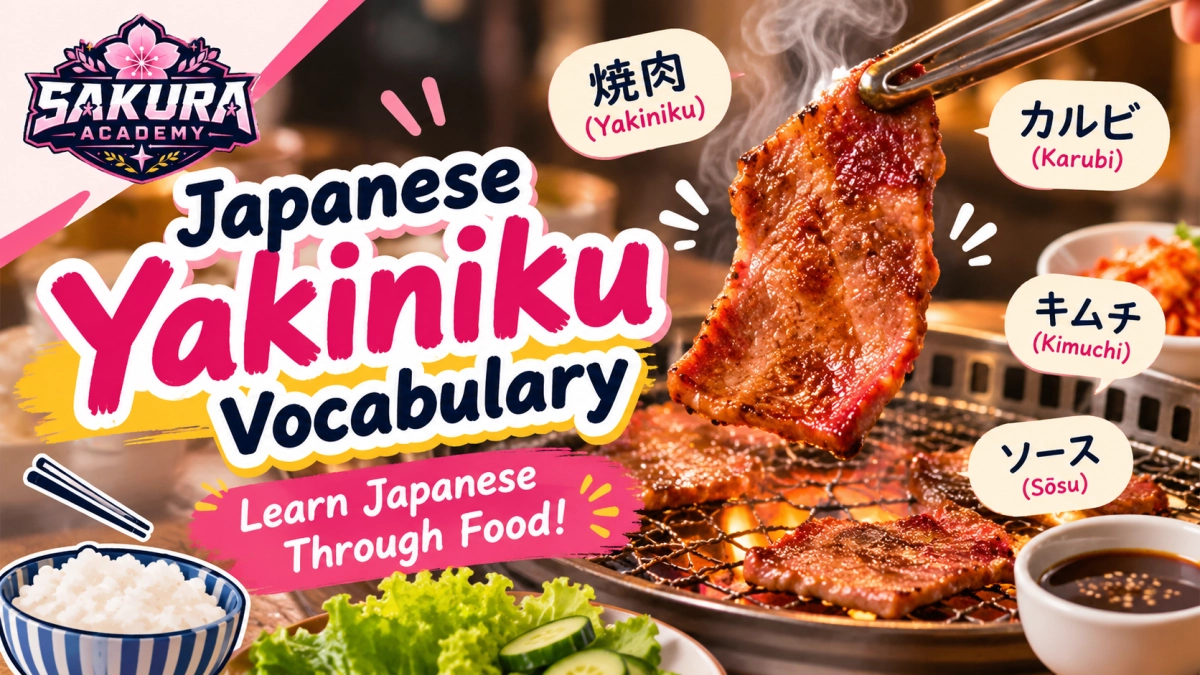
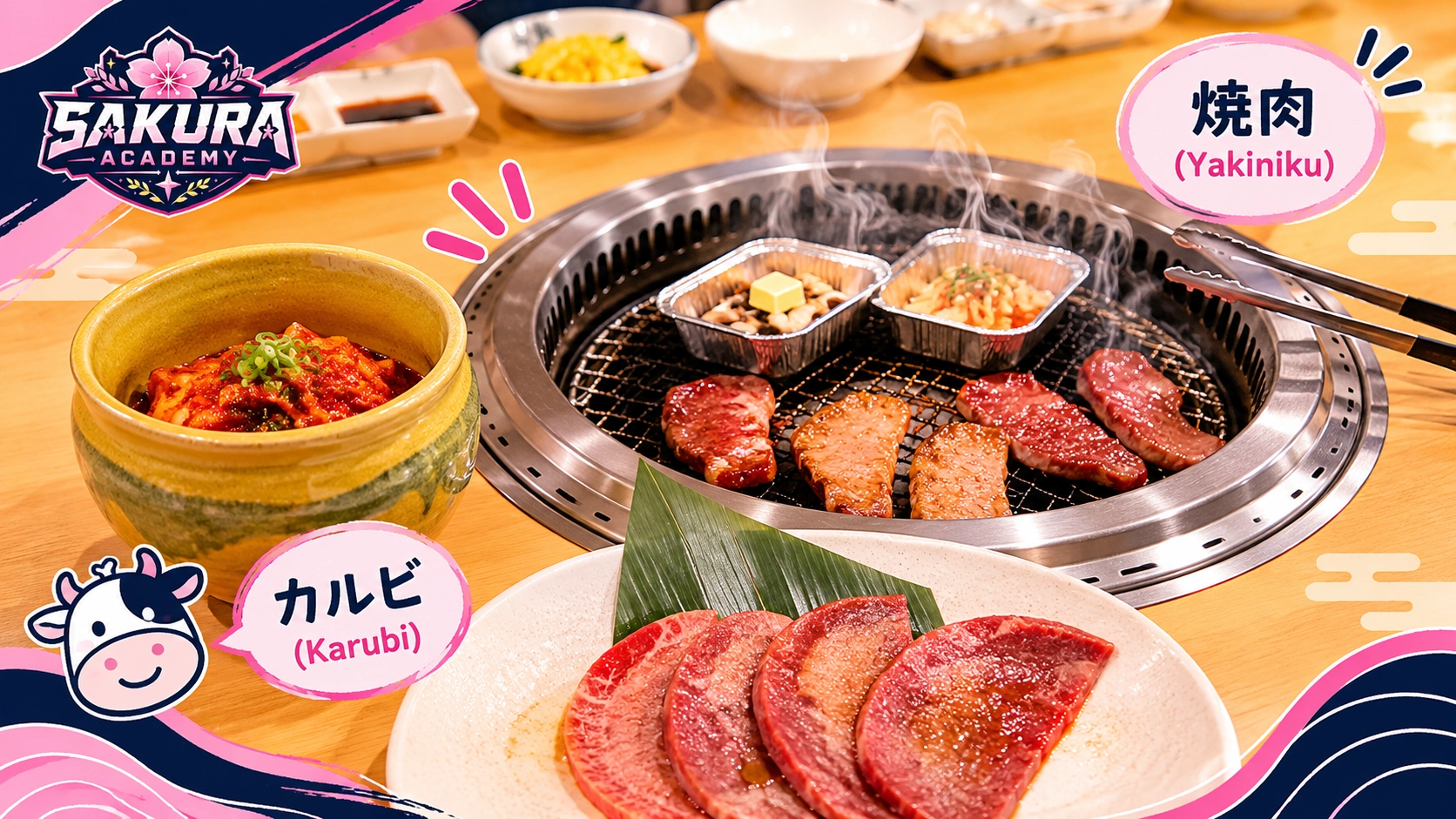
Yakiniku (焼肉), or Japanese barbecue, is a popular dining experience where people enjoy grilled meat, sauces, and delicious side dishes together.
Learning Japanese food vocabulary is a practical way to improve your Japanese skills and feel more confident when ordering food or chatting at a Japanese restaurant.
1. Essential Yakiniku Vocabulary
| Japanese | Romaji | English |
|---|---|---|
| 焼肉 | Yakiniku | Japanese barbecue |
| カルビ | Karubi | Beef short ribs |
| ソース | Sōsu | Sauce |
| キムチ | Kimuchi | Kimchi |
| きゅうり | Kyūri | Cucumber |
| きゅうり漬け | Kyūri-zuke | Pickled cucumber |
| ネギ | Negi | Green onion |
| 肉 | Niku | Meat |
2. How to Describe Food in Japanese
Knowing how to describe taste and texture helps you express your opinions naturally in Japanese.
| Japanese | Romaji | English |
|---|---|---|
| おいしい | Oishii | Delicious |
| 甘辛い | Amakarai | Sweet and spicy |
| 辛い | Karai | Spicy |
| 柔らかい | Yawarakai | Soft / Tender |
| 厚い | Atsui | Thick |
| もちもち | Mochimochi | Chewy and soft |
| サクサク | Sakusaku | Crispy |
- これ、おいしい!(Kore, oishii!) – This is delicious!
- 柔らかくておいしい。(Yawarakakute oishii.) – It's tender and delicious.
- 外はサクサク、中はもちもち。(Soto wa sakusaku, naka wa mochimochi.) – It's crispy outside and chewy inside.
3. Useful Japanese Restaurant Phrases
Here are some everyday expressions you can use when eating at a Japanese restaurant:
| Japanese | Romaji | English |
|---|---|---|
| これは何ですか? | Kore wa nan desu ka? | What is this? |
| 食べてみよう! | Tabete miyō! | Let's try it! |
| おいしいですか? | Oishii desu ka? | Is it delicious? |
| いただきます! | Itadakimasu! | A phrase said before eating |
| 何点ですか? | Nanten desu ka? | What score would you give it? |
4. Learn Japanese Through Real-Life Conversations
Want to hear these words in a natural conversation?
In Sakura Academy's video, Suzu-chan enjoys yakiniku while talking about the food's taste, texture, and ingredients. Listen carefully and see how Japanese vocabulary is used in a real-life setting.
🎥 Watch the video on Sakura Academy Facebook:
Learning Japanese doesn't have to mean memorising long vocabulary lists. By connecting new words with food, daily activities, and real conversations, you can gradually build practical Japanese communication skills.
Learn to use Japanese, not just memorise it!
🌸 Sakura Academy – Learn to use it, not just pass the test!
Nice, you reached the end. Want to keep going?
Here are a few smart picks to read next.