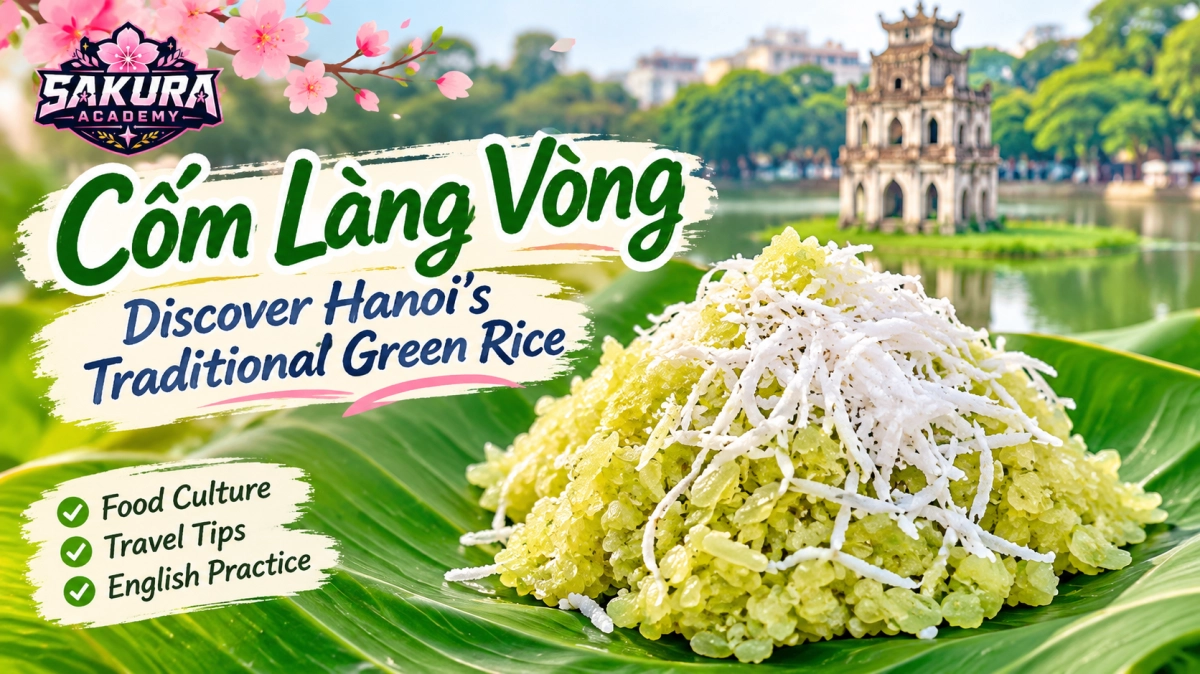
Hanoi is famous for its beautiful streets, historic landmarks and delicious traditional food. Among its most beloved seasonal specialities is Cốm Làng Vòng, a delicate green rice delicacy that represents the flavours and traditions of Hanoi.
Made from young glutinous rice, cốm is known for its natural green colour, gentle fragrance and soft, slightly chewy texture. It is particularly associated with autumn in Hanoi and has become an important part of the city's food culture.
In this article, let's discover what makes Cốm Làng Vòng special, how Vietnamese people enjoy it, which cultural attractions you can explore in Hanoi, and how to use this local food experience to practise English.
1. What Is Cốm Làng Vòng?
Cốm Làng Vòng is a traditional Vietnamese speciality originating from Vòng Village in Hanoi. It is made from young glutinous rice harvested before the grains become fully mature.
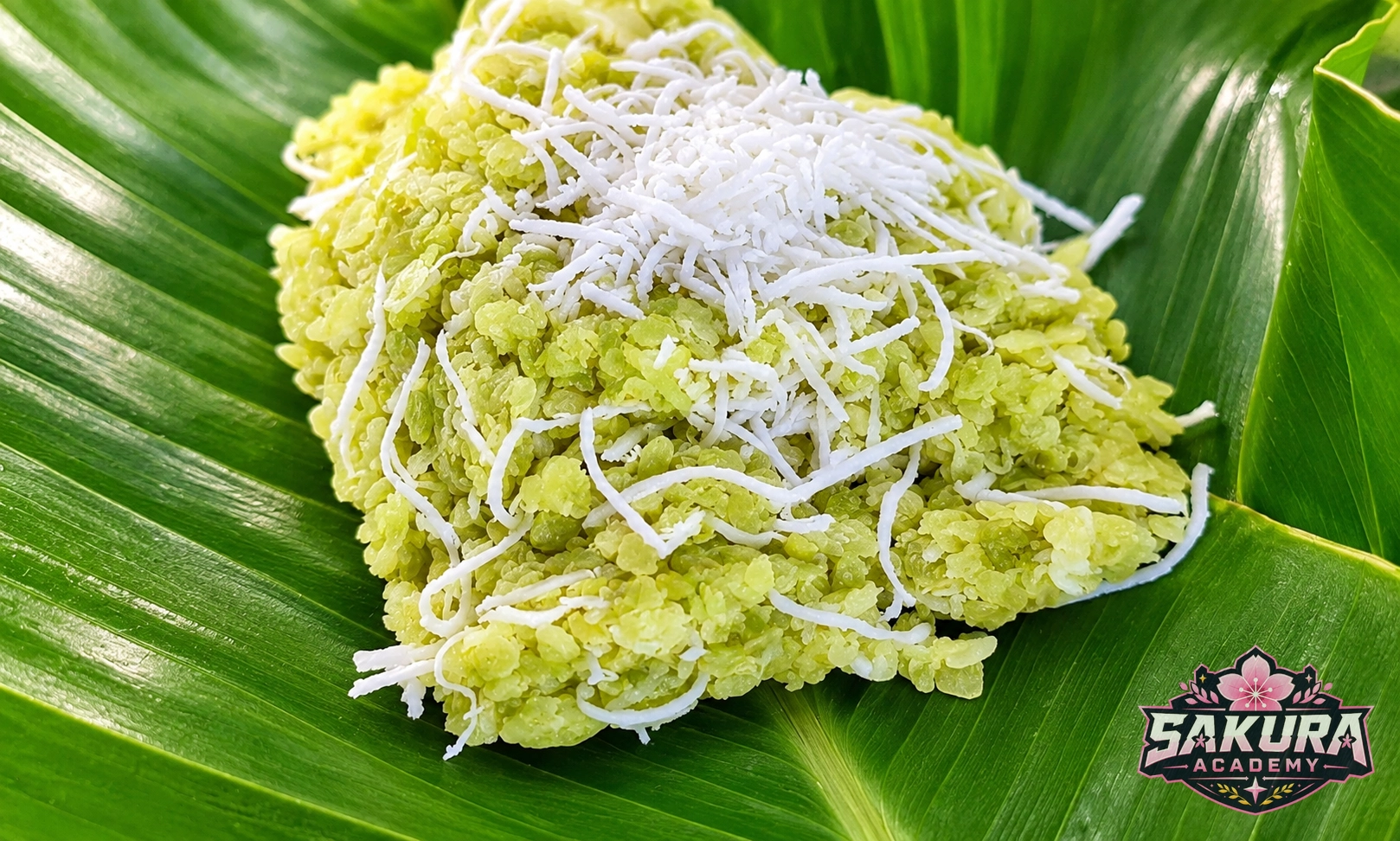
Unlike ordinary cooked rice, cốm is prepared through a traditional process that gives it a distinctive texture and delicate aroma. The young rice grains are processed, roasted and gently pounded to create soft green rice flakes.
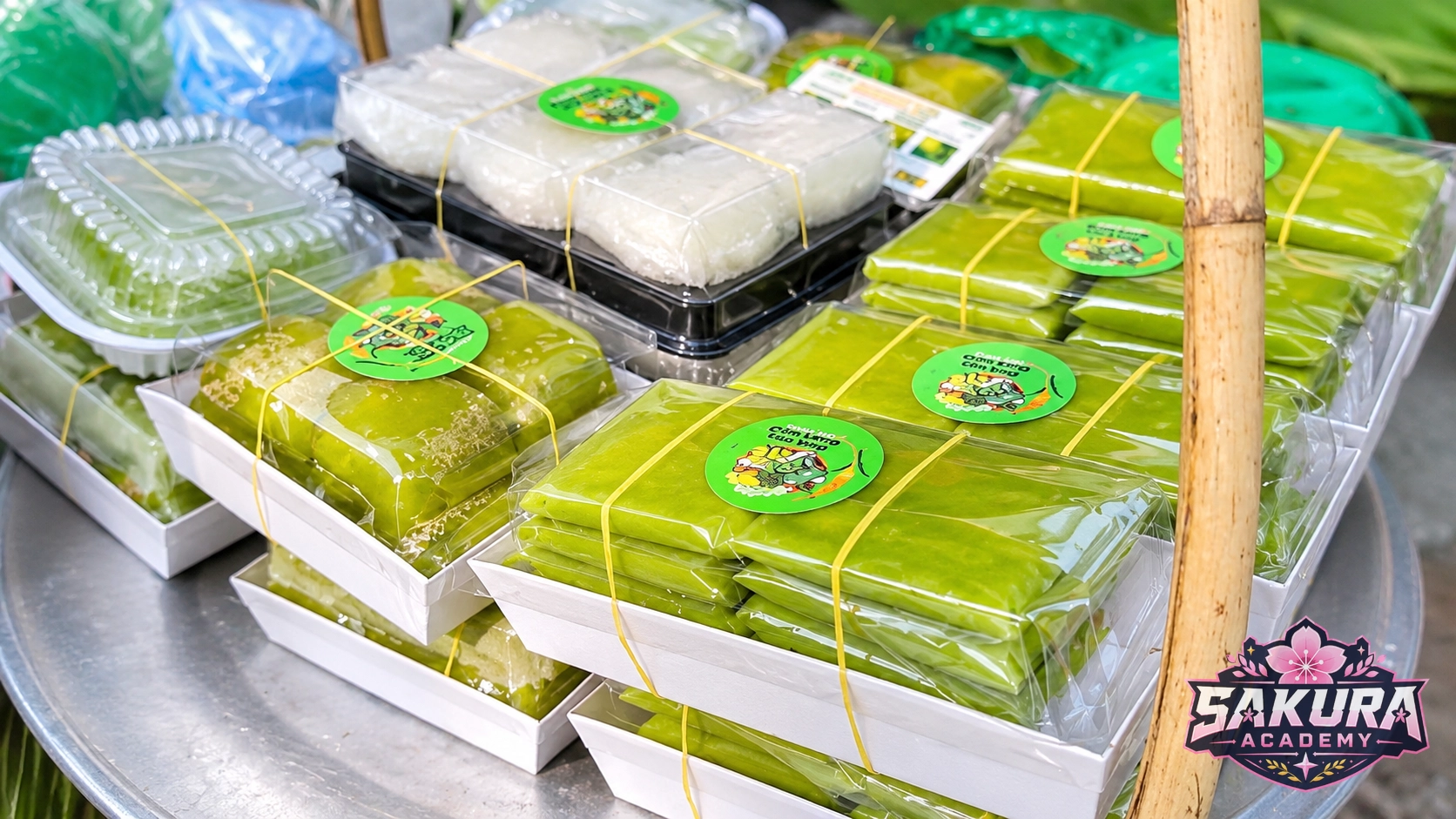
Traditionally, cốm is wrapped in leaves to help preserve its fragrance and freshness. Its natural green colour and subtle taste make it instantly recognisable.
For many Hanoians, cốm is more than just food. It is a symbol of autumn, family traditions and the cultural identity of Hanoi.
2. What Makes Cốm Làng Vòng Special?
There are several reasons why this traditional food is so well loved.
Natural green colour
Cốm is recognised for its gentle green colour, which comes from the young rice grains and traditional preparation process.
Delicate fragrance
It has a pleasant, natural aroma that makes the eating experience special even before the first bite.
Soft and slightly chewy texture
Because it is made from glutinous rice, cốm has a soft, sticky and slightly chewy texture.
A connection to Hanoi's autumn
Cốm is strongly associated with autumn in Hanoi. Its appearance in local markets and traditional food shops reminds many people of the changing seasons.
3. How Do Vietnamese People Enjoy Cốm?
Cốm can be enjoyed in several different ways. Here are some popular examples:
- Fresh cốm: Enjoyed on its own to appreciate its natural fragrance and delicate flavour.
- Cốm with banana: A traditional combination in which the sweetness of ripe banana complements the gentle taste of green rice.
- Bánh cốm: A traditional Vietnamese cake with a soft green outer layer and a sweet mung bean filling. It is also commonly associated with celebrations and wedding traditions.
- Chả cốm: A savoury dish made with cốm and minced pork, often enjoyed with other Vietnamese dishes.
- Chè cốm: A sweet Vietnamese dessert featuring cốm.
Each dish offers a different way to experience the flavour and texture of this traditional ingredient.
4. When Is Cốm Season in Hanoi?
Cốm is particularly associated with autumn in Hanoi, when the weather becomes cooler and seasonal food traditions become part of everyday life.
Fresh cốm is traditionally available during the autumn harvest period, although the exact season and availability can vary.
If you visit Hanoi during this time, look for traditional food shops and local markets selling cốm. You can also ask local producers about its preparation and the history of Vòng Village.
5. Sakura Academy Food Tour: Thuy Tries Cốm Làng Vòng in Hanoi!
Learning about Vietnamese culture becomes even more interesting when you experience it yourself.
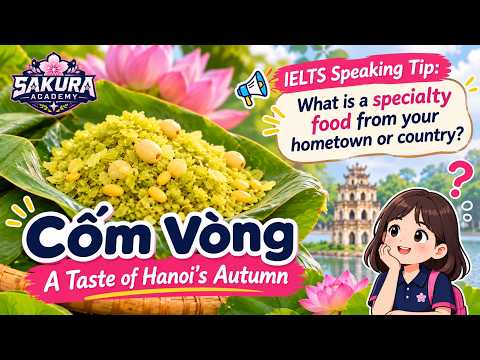
In this Sakura Academy food-tour video, Thuy introduces Cốm Làng Vòng and shares her experience tasting this traditional Hanoi speciality.
The seller tells her that the cốm comes from Vòng Village, traditionally known as the place of origin of this speciality.
During the tasting, Thuy explores the natural green colour, pleasant fragrance and soft texture of the young glutinous rice. She also tries it together with lotus seeds and yellow beans.
Although she has been Vietnamese for more than 20 years, this is her first time trying what is presented to her as authentic Cốm Làng Vòng in Vietnam!
Watch the video and discover this traditional Hanoi delicacy with Thuy.
6. Places to Visit in Hanoi: Discover the City's Culture
If you are planning a trip to Hanoi, why not combine a local food experience with visits to some of the city's most famous attractions?
Here are four places worth exploring:
Vòng Village
Discover the traditional home of Cốm Làng Vòng and learn about the history of this famous Hanoi speciality. If you are interested in local food culture, this is a meaningful place to explore.
Hanoi Old Quarter
The Old Quarter is famous for its narrow streets, traditional shops, street food and lively atmosphere. It is a wonderful place to experience everyday life in Hanoi.
Hoàn Kiếm Lake and Ngọc Sơn Temple
Located in the heart of Hanoi, Hoàn Kiếm Lake is one of the city's most recognisable landmarks. Visitors can enjoy a peaceful walk around the lake and explore Ngọc Sơn Temple.
Temple of Literature – Quốc Tử Giám
Built in 1070, the Temple of Literature is one of Vietnam's most important historical and cultural landmarks. It is closely associated with education and the country's scholarly traditions.
Visiting these places can help you understand Hanoi beyond its famous food and tourist attractions.
7. Learn English Through Local Cuisine
Food is an excellent topic for practising English because it allows you to describe flavours, textures, ingredients and cultural traditions.
Here are some useful words and expressions from our Cốm Làng Vòng food tour.
Food vocabulary
| English | Vietnamese |
|---|---|
| Young glutinous rice | Gạo nếp non |
| Green rice flakes | Cốm xanh |
| Lotus seed | Hạt sen |
| Yellow beans | Đậu vàng |
| Mung beans | Đậu xanh |
| Leaf-wrapped | Được gói bằng lá |
| Natural colour | Màu sắc tự nhiên |
| Fragrance / Aroma | Hương thơm |
| Texture | Kết cấu |
| Traditional speciality | Đặc sản truyền thống |
Words to describe food
| English | Vietnamese |
|---|---|
| Soft | Mềm |
| Sticky | Dẻo, dính |
| Chewy | Dai |
| Tender | Mềm, mềm mại |
| Fresh | Tươi |
| Mildly sweet | Ngọt nhẹ |
| Fragrant | Thơm |
| Delicious | Ngon |
| Authentic | Chính gốc, đích thực |
Useful English expressions
You can use these expressions when introducing traditional food or talking about your favourite dishes.
- It is made from... – Nó được làm từ...
- It is traditionally wrapped in... – Theo truyền thống, món này được gói bằng...
- It has a natural green colour. – Nó có màu xanh tự nhiên.
- It smells wonderful. – Nó có mùi thơm tuyệt vời.
- It has a soft and slightly chewy texture. – Nó có kết cấu mềm và hơi dai.
- This is my first time trying it. – Đây là lần đầu tiên tôi thử món này.
- I would highly recommend it to visitors. – Tôi rất muốn giới thiệu món này cho du khách.
8. Explore More Cultural Experiences with Sakura Academy
Discovering a country through its traditional food, local attractions and cultural heritage is a wonderful way to learn about the world while practising English.
If you enjoy exploring cultural destinations, take a look at our travel guide:
Things to Do Near Mount Fuji, Japan
Discover places around Mount Fuji, including Lake Kawaguchi and other local attractions, while learning more about Japanese nature, history and culture.
At Sakura Academy, we believe that language learning becomes more meaningful when you connect it with real places, people and experiences.
Frequently Asked Questions About Cốm Làng Vòng
What is Cốm Làng Vòng?
Cốm Làng Vòng is a traditional Hanoi speciality made from young glutinous rice. It is famous for its natural green colour, delicate fragrance and soft, slightly chewy texture.
What does Cốm Làng Vòng taste like?
It has a gentle, slightly sweet flavour with a pleasant natural aroma. Its texture is soft, sticky and slightly chewy.
When is the best time to try Cốm Làng Vòng?
Autumn is traditionally associated with fresh cốm in Hanoi. However, availability can vary depending on the season and producer.
What is the difference between cốm and bánh cốm?
Cốm refers to the young green rice flakes themselves. Bánh cốm is a traditional Vietnamese cake made with a green outer layer and usually a sweet mung bean filling.
What other traditional foods should I try in Hanoi?
Visitors can explore many famous Hanoi dishes, including phở, bún chả, bánh cuốn and chả cá. Each offers a different taste of the city's food culture
Nice, you reached the end. Want to keep going?
Here are a few smart picks to read next.