Course Details
Course Objectives
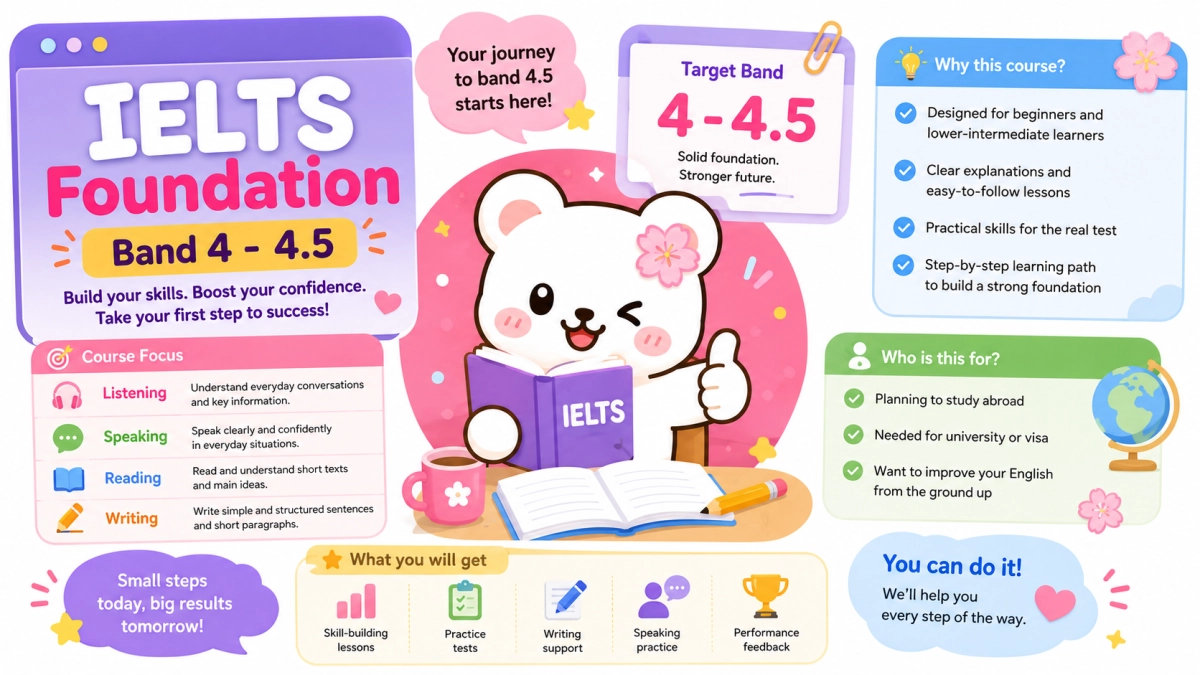
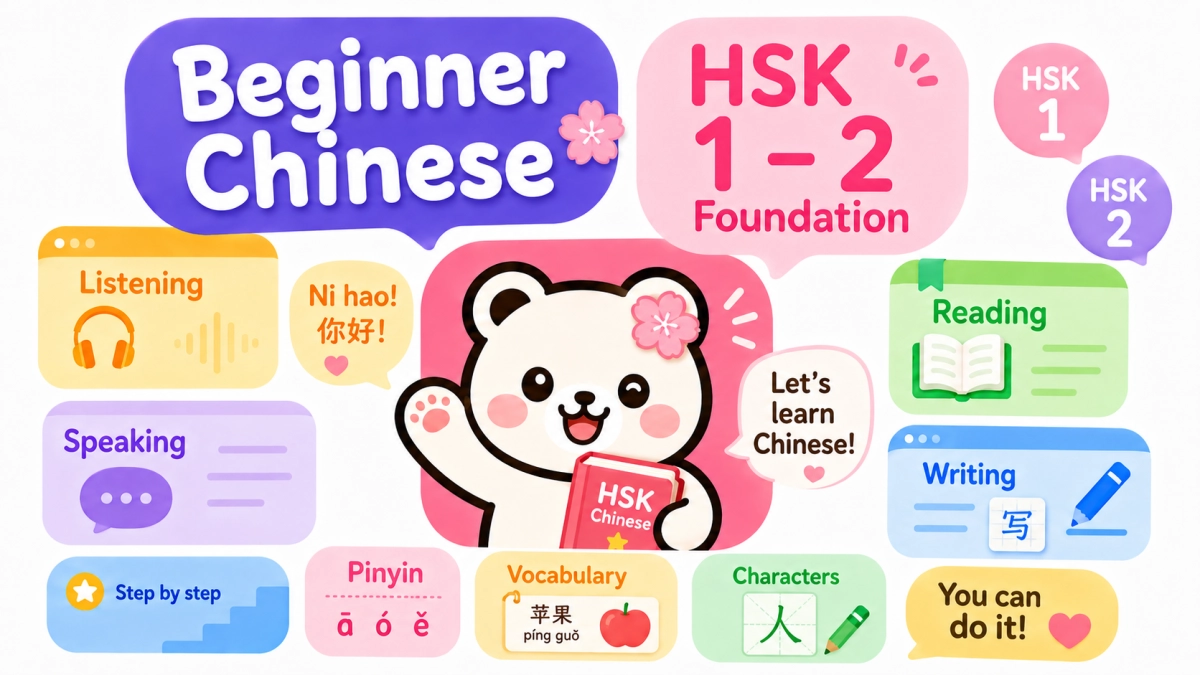
- Build a strong Mandarin Chinese foundation for beginners aiming to achieve HSK Level 1 to HSK Level 2 proficiency.
- Develop the four core language skills - Listening, Speaking, Reading, and Writing - together with pronunciation, tones, grammar, and essential vocabulary through an integrated learning approach.
- Strengthen students’ communication abilities in everyday situations such as self-introduction, shopping, transportation, dining, school, and daily conversations.
- Build a solid understanding of Chinese sentence structures, pinyin pronunciation systems, and commonly used expressions.
- Develop students’ confidence in communicating naturally while introducing cultural awareness and practical language usage in Chinese-speaking environments.
Course Requirements
- Prerequisite: Suitable for complete beginners or learners with very limited Chinese proficiency.
- Placement Test: A placement assessment may be conducted prior to enrollment to determine the most suitable learning level.
- No previous HSK learning experience is required.
Learning Pathway
Stage 1: Chinese Foundation (HSK 1 Preparation)
Recommended Duration
- 4 – 6 months
Estimated Lessons
- 40 – 60 lessons
Estimated Study Hours
- Approximately 60 – 90 hours
Focus Areas
- Pinyin pronunciation and tones
- Basic sentence structures
- Essential everyday vocabulary
- Listening and Speaking foundation
- Character recognition and writing basics
- Beginner-level communication practice
Stage 2: Elementary Communication Development (HSK 2 Preparation)
Recommended Duration
- 4 – 6 months
Estimated Lessons
- 40 – 60 lessons
Estimated Study Hours
- Approximately 60 – 90 hours
Focus Areas
- Expansion of vocabulary and grammar patterns
- Daily conversation development
- Reading short passages and dialogues
- Writing simple sentences and paragraphs
- Listening comprehension improvement
- HSK-style exercises and communication practice
Skill Targets
Listening
- Students will develop the ability to understand basic Chinese conversations, classroom instructions, and everyday expressions used in familiar situations.
- Students will improve listening accuracy through audio practice, repetition activities, and real-life communication exercises.
Target
- Understand and respond to basic HSK 1–2 level listening materials confidently by course end.
Reading
- Students will gradually recognize and understand basic Chinese characters, simple dialogues, signs, and short reading passages.
- Students will develop reading comprehension skills through vocabulary-building and contextual reading activities.
Target
- Read and understand beginner-level HSK 1–2 texts and questions independently.
Writing
- Students will learn basic Chinese character writing, sentence construction, and simple paragraph organization.
- Students will practice writing short self-introductions, daily routines, descriptions, and simple communication messages.
Target
- Write accurate beginner-level Chinese sentences and short paragraphs appropriate for HSK 1–2 level.
Speaking
- Students will improve pronunciation, tones, fluency, and communication confidence through interactive Speaking activities.
- Students will practice introducing themselves, asking and answering questions, expressing opinions, and handling basic daily-life situations in Chinese.
Target
- Communicate naturally in familiar beginner-level situations using HSK 1–2 vocabulary and sentence patterns.
Pronunciation and Tone Accuracy
- Master pinyin pronunciation systems and the four tones in Mandarin Chinese.
- Develop clearer pronunciation and tone differentiation through guided speaking and listening exercises.
- Practice tone correction and conversational rhythm regularly throughout the course.
Teaching Methodology
- Integrated four-skill learning approach where Listening, Speaking, Reading, and Writing reinforce one another.
- Communicative and topic-based instruction focused on practical daily-life Chinese usage.
- Interactive classroom activities including role-play, pair work, pronunciation drills, games, and guided conversation practice.
- Continuous feedback and progress monitoring to support individual learning development.
- Cultural integration activities to help students better understand Chinese communication styles and social expressions.
Textbook and Materials
Main Materials
- Digital Chinese learning materials and HSK-focused curriculum provided by Sakura Academy.
Supplementary Materials
- Available via the Sakura Academy Portal, including:
- HSK vocabulary lists and exercises
- Pronunciation and tone practice materials
- Listening audio and conversation videos
- Character writing worksheets
- Speaking practice activities and quizzes
- Interactive communication exercises
Recommended Self-Study
- Students are strongly encouraged to complete 30–60 minutes of daily self-study outside class.
- Recommended activities include vocabulary memorization, pronunciation practice, shadowing, listening exercises, character writing, and speaking rehearsal.
- Consistent self-study significantly improves language retention, pronunciation accuracy, and communication confidence.
Syllabus Flexibility
- Pacing and emphasis may be adjusted based on diagnostic assessments, ongoing performance, learning goals, and mutual agreement between instructors and students. Sakura Academy aims to provide a flexible and supportive learning environment tailored to each learner’s needs.
- For further information, placement consultation, or course inquiries, please contact Sakura Academy directly.